
Over the past decade, India has emerged as one of the most ambitious renewable energy markets in the world. Large solar parks have been developed across Rajasthan and Gujarat, wind turbines now dominate several coastal landscapes, and national policy continues to push aggressively toward cleaner energy systems. The government has set a target of 500 GW of non-fossil fuel energy capacity by 2030, placing renewable energy at the center of the country’s long-term development strategy.
At first glance, the trajectory appears straightforward: expand solar and wind capacity, reduce reliance on fossil fuels, and gradually transition toward a cleaner electricity system. In reality, however, scaling renewable energy in India is far more complex. Unlike conventional power plants that can be built close to demand centers and operated continuously, renewable energy systems depend on natural conditions, land availability, and grid infrastructure. These factors introduce practical constraints that make large-scale deployment more challenging than it may initially seem.
While solar and wind capacity continues to grow, three structural issues remain central to the real challenges of renewable energy in India: the limited availability of land for large projects, energy losses across long transmission networks, and the inherent unpredictability of natural energy resources. Understanding these challenges is essential for policymakers, investors, engineers, and innovators who are working to shape the future of India’s energy system.
India’s Renewable Energy Transition
India’s electricity demand is expected to rise significantly over the next two decades. Rapid urbanisation, industrial expansion, the electrification of transportation, amongst others, are all contributing to a steady increase in energy consumption. Renewable energy is therefore not only an environmental priority but also a strategic necessity. Expanding solar and wind capacity allows the country to reduce dependence on imported fossil fuels while building a more sustainable energy mix.
However, renewable energy technologies operate under physical and infrastructural constraints that differ fundamentally from traditional power generation. Solar panels require large areas of open land, wind turbines must be installed in locations with consistent wind patterns, and electricity generated in remote regions must travel long distances before reaching urban demand centers. As renewable capacity continues to expand, these constraints become more visible. Among the many factors influencing renewable deployment, three challenges stand out in particular.
1. Limited Land Availability
One of the most significant challenges facing renewable energy development in India is the amount of land required to generate electricity at scale.
Large solar farms require extensive open space. On average, utility-scale solar installations need roughly four to five acres of land per megawatt of installed capacity. When projects reach hundreds or even thousands of megawatts, the total land footprint becomes substantial.
In countries with low population density, allocating land for renewable energy projects can be relatively straightforward. India, however, faces a very different reality. Land is already under intense pressure from agriculture, urban expansion, transportation infrastructure, and industrial development. Agricultural land supports millions of livelihoods, and acquiring large areas for solar or wind farms can sometimes create conflicts between energy development and existing land use. Even when land is available, the acquisition process often involves lengthy regulatory procedures and negotiations with local communities.
Another dimension of the land challenge is geographic mismatch. The regions that receive the highest solar radiation or strongest wind resources are often located far from the cities where electricity demand is concentrated. As a result, renewable projects are frequently built in remote areas while energy consumption remains highest in major urban centers.
This spatial imbalance creates additional complexity for the energy system and highlights the importance of exploring alternative models of energy generation that require less dedicated land.
2. Transmission Loss and Grid Constraints
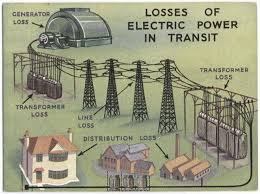
Generating renewable electricity is only the first step. The next challenge is delivering that power efficiently to the people and industries that need it. India’s electricity grid spans vast distances, connecting generation facilities to cities, factories, and households across the country. As electricity travels through transmission lines and distribution networks, a portion of the energy is inevitably lost due to resistance in power lines and inefficiencies within the grid.
Although India has made significant improvements in its electricity infrastructure over the past decade, transmission and distribution losses still represent a considerable inefficiency within the system. For renewable energy projects located far from demand centers, these losses can become even more pronounced. Electricity generated in a solar park in Rajasthan or a wind farm in southern India may need to travel hundreds of kilometres before reaching large metropolitan areas. The longer this distance, the greater the amount of energy that can be lost along the way.
Grid stability also becomes more challenging as renewable energy capacity increases. Solar and wind generation can fluctuate depending on weather conditions, and the electricity grid must constantly adjust to maintain a balance between supply and demand. When generation suddenly increases, for example during periods of strong sunlight or wind, the grid must be capable of absorbing and distributing that electricity without instability. If infrastructure is not
sufficiently flexible, renewable generation may sometimes need to be curtailed, meaning that power is produced but cannot be fully utilized.
Strengthening grid infrastructure and improving transmission efficiency will therefore be critical for supporting the next phase of renewable energy growth in India.
3. Unpredictability of Natural Resources
A third challenge lies in the nature of renewable energy itself. Solar and wind power depend entirely on environmental conditions, which makes electricity generation inherently variable. Solar panels produce power only when sunlight is available. Generation typically peaks during midday hours and declines rapidly in the evening. Wind energy is similarly dependent on local weather patterns, which can vary significantly across seasons and regions. For an electricity system that must provide reliable power throughout the day and night, this variability introduces an additional layer of complexity.
Electricity demand does not always align with renewable generation patterns. Urban energy consumption often increases during evening hours when solar generation declines. Similarly, wind speeds may fluctuate unpredictably, leading to sudden changes in electricity output. To manage this variability, energy systems must incorporate complementary technologies such as energy storage, grid balancing mechanisms, and diversified generation sources. Battery storage systems, pumped hydro facilities, and advanced grid management technologies are increasingly being developed to address these challenges. These solutions allow excess renewable energy generated during peak production periods to be stored and used when demand increases.c However, large-scale deployment of these technologies requires continued investment, technological innovation, and supportive infrastructure.
Until these systems are widely implemented, the unpredictability of natural resources will remain one of the defining challenges of renewable energy integration.
Rethinking the Structure of Energy Systems
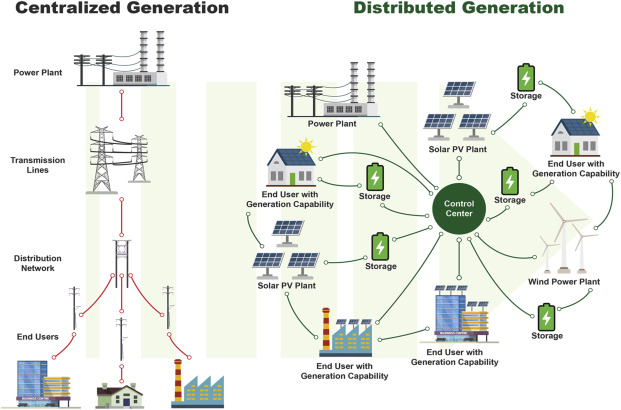
These challenges highlight an important point: transitioning to renewable energy is not simply about building more solar panels or installing more wind turbines. It requires rethinking how the entire energy system is designed. For decades, electricity generation has been based on centralized power plants that produce energy in one location and distribute it across large regions through extensive transmission networks. As renewable energy becomes a larger part of the energy mix, this model is gradually evolving.
Increasingly, energy experts are exploring decentralised and distributed energy systems, where electricity is generated closer to where it is consumed. Instead of relying solely on large power plants located far from urban centers, future energy systems may integrate generation directly into infrastructure, buildings, and transportation networks. Such approaches could help reduce transmission losses, minimize land requirements, and create more resilient energy systems.
The Road Ahead for Renewable Energy in India
India’s progress in renewable energy has already been remarkable. Few countries have expanded solar and wind capacity as rapidly or at such scale. Yet the next stage of the energy transition will depend on how effectively the country addresses the structural challenges associated with renewable deployment.
Limited land availability, transmission losses, and the variability of natural energy sources will continue to shape how renewable infrastructure develops in the coming years. At the same time, innovation in distributed energy systems, energy storage technologies, and infrastructure-integrated generation offers promising opportunities to overcome these constraints.
As India continues to pursue a cleaner and more sustainable energy future, the focus will increasingly shift from simply expanding renewable capacity to designing smarter and more adaptable energy systems. Ultimately, the success of renewable energy in India will depend not only on how much electricity is generated, but also on how effectively it is integrated into the country’s evolving energy landscape.
Thanks for reading :)